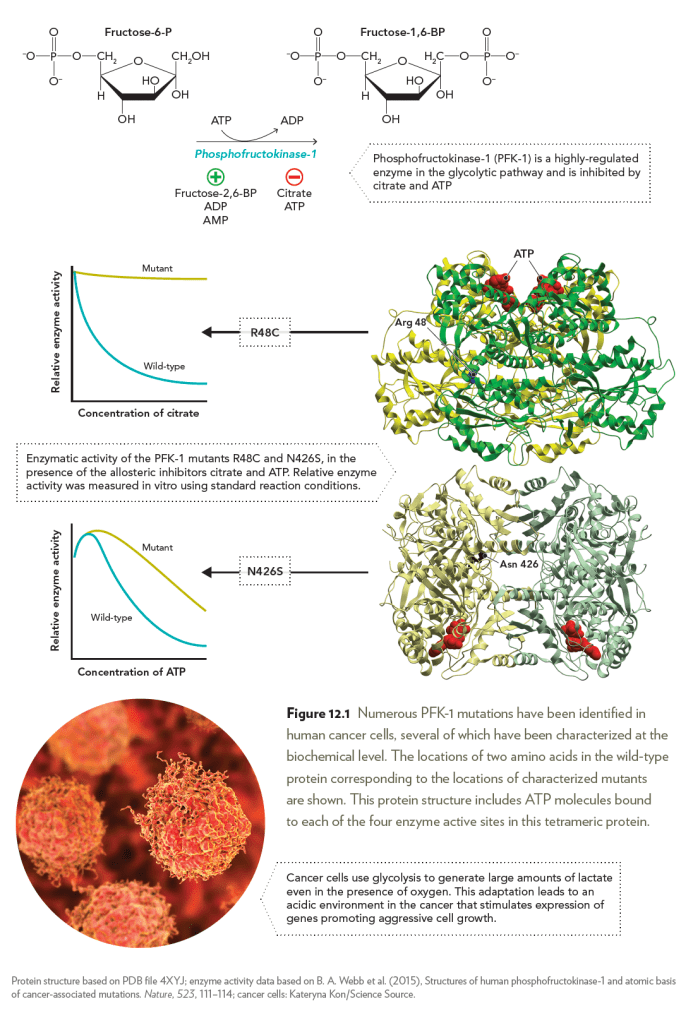
The enzyme phosphofructokinase-1 (PFK-1) controls flux through glycolysis
as a function of allosteric control. Under conditions of high ATP
or citrate levels in cells, the catalytic activity of PFK-1 is normally inhibited
owing to a high energy charge in the cells. Mutations in PFK-1,
such as R48C and N426S, are advantageous to cancer cells because these
mutations reduce the ability of citrate and ATP to feedback inhibit the
glycolytic pathway and thereby lead to higher levels of ATP synthesis.
It has been known for over 100 years that cancer cells use glucose at a
much higher rate than do normal cells to generate ATP. This dependence
of cancer cells on glycolysis is known as the Warburg effect, which was
first described by Otto Warburg in 1925. Mutations in PFK-1 that favor
high rates of metabolic flux through glycolysis contribute to the Warburg
effect and lead to the aggressive growth of cancer cells.
Study guide: Chapter 12 — The Glycolytic Pathway

