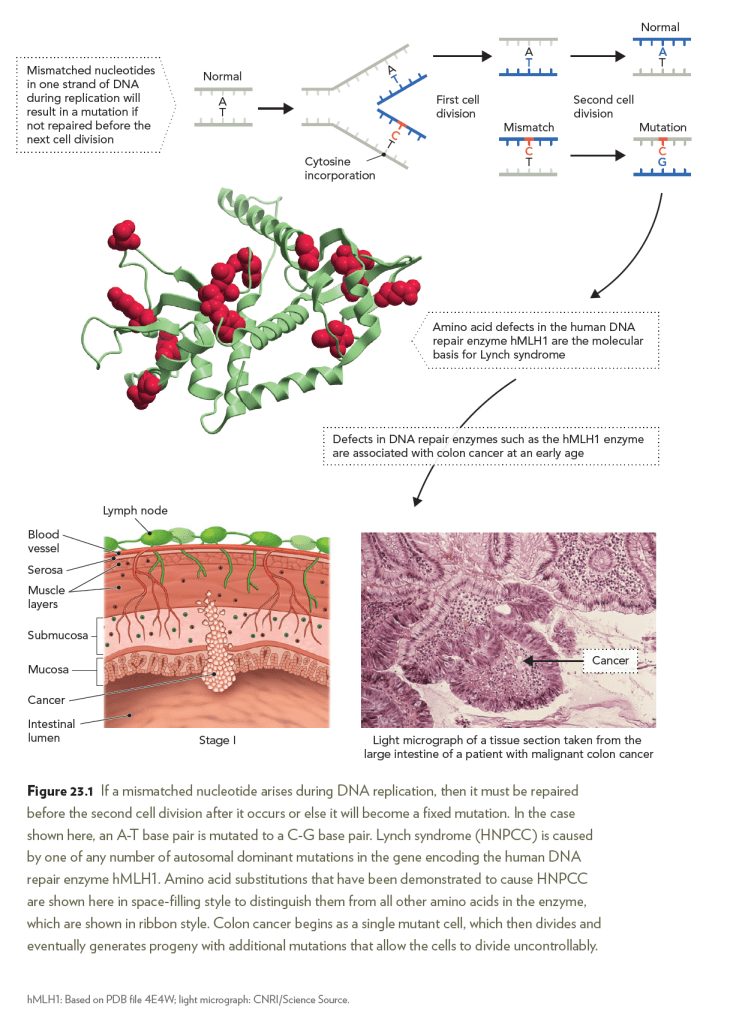
Mutations in genes encoding DNA repair enzymes can be catastrophic.
For example, hereditary non-polyposis colorectal cancer (HNPCC), or
Lynch syndrome, is characterized by the appearance of cancer at an early
age due to expression of repair enzyme variants that are less effective at
mismatch repair. In many cases, the first cancers to arise in these individuals
are colon cancers owing to mutations occurring in the rapidly
dividing intestinal epithelial cells. Nucleotide mismatches can occur
during DNA replication that must be repaired before the next cell division.
DNA is also subjected to mutations that result from spontaneous
chemical changes or exposure to chemical mutagens or ultraviolet light.
If the damaged nucleotides and bases are not repaired, they can lead to
diseases such as cancer. If the damage occurs in reproductive cells, it can
cause transmissible, or heritable, genetic mutations.
Study guide: Chapter 23 — DNA Metabolism

