Cell signaling systems link the extracellular environment to changes in
cellular processes such as neuronal signaling initiated by the activation
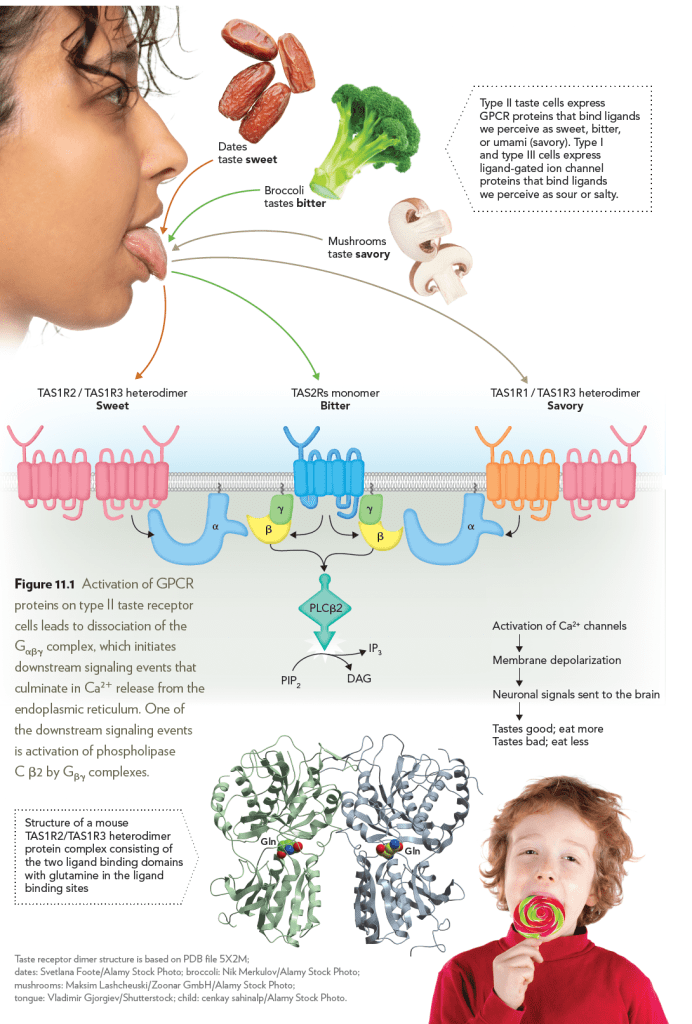
of G protein–coupled receptors (GPCRs). Extracellular ligands bind to GPCR proteins and activate signals responsible for transmitting human sensations such as taste and smell. Some taste receptor cells on the tongue express GPCR proteins that detect bitter-tasting flavor molecules, while others detect sweet-tasting molecules or umami-tasting molecules. In the presence of these taste molecules, the taste GPCRs are stimulated and undergo conformational changes that transmit downstream signals. These downstream signaling events include increased levels of the second messenger inositol-1,4,5-trisphosphate (IP3), which activates calcium channels that release Ca2+ ions, resulting in membrane depolarization and neuronal signaling in the brain. These neuronal signals are interpreted by our brains as the sensations of bitter, sweet, or savory tastes of food.
Study guide: Chapter 11 — Cell Signaling Proteins

